

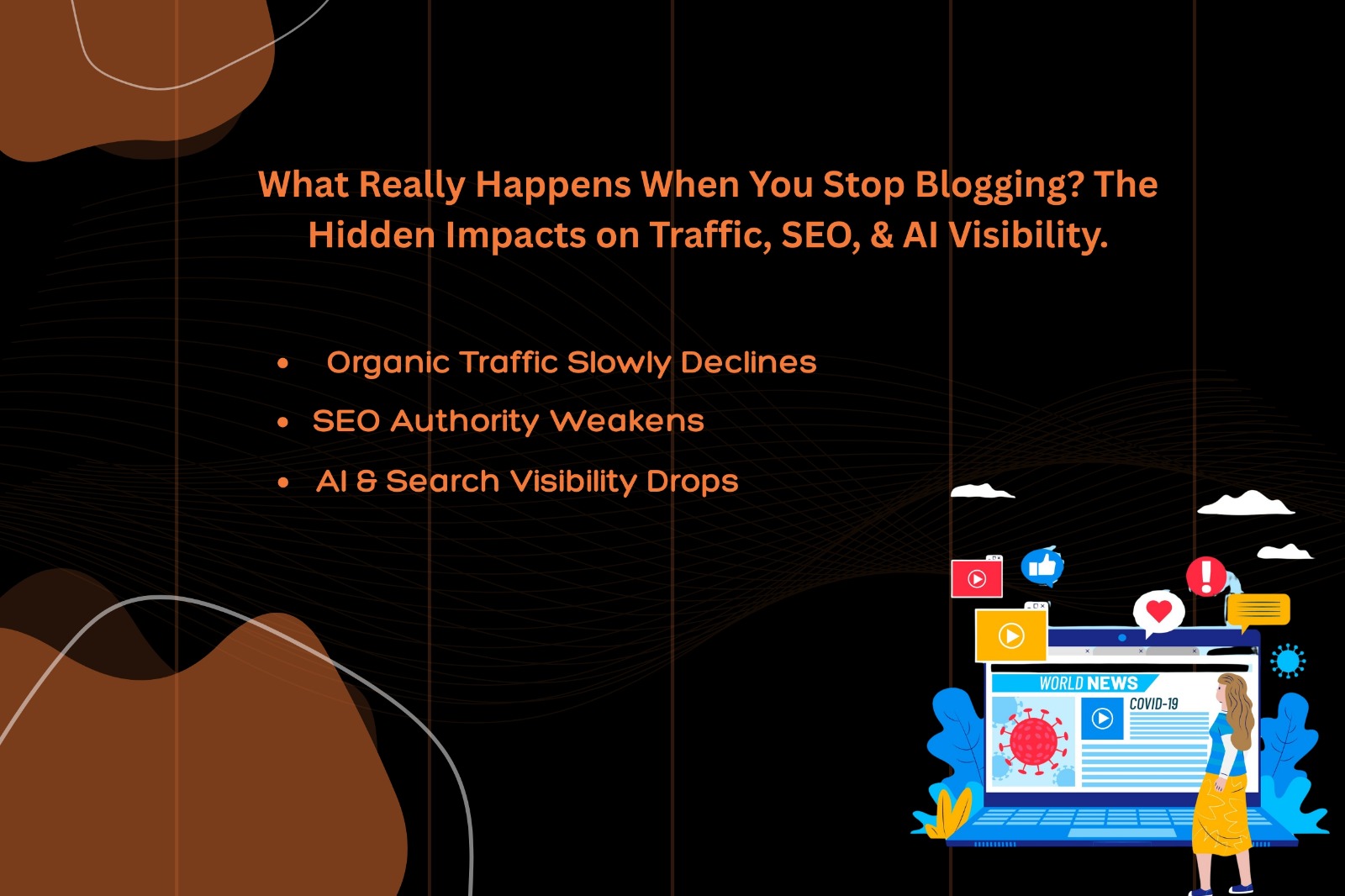
Many businesses think blogging is a one-time SEO task. Publish a few posts, rank on Google, and traffic will keep coming forever.
But the reality is very different.
When you stop blogging, the impact is slow, silent, and damaging—especially in today’s AI-driven search era.
Let’s break it down.
“Design is the fundamental soul of a human-made creation that ends up expressing itself in successive outer layers of the product or service.”
-Steve Jobs-

1. Organic Traffic Slowly Declines
Search engines prioritize fresh, relevant content.
When your blog stops updating:
- Existing posts become outdated
- Competitors publish newer content
- Your rankings slowly slide down
Traffic doesn’t disappear overnight—but month by month, it drops.
📉 Less content = fewer chances to rank
2. SEO Authority Starts Weakening
Consistent blogging signals authority and trust to search engines.
When you stop:
- Fewer pages get indexed
- Internal linking growth stops
- Backlink opportunities reduce
Over time, Google sees your site as inactive, even if your services are still active.
🔍 SEO is not static—it needs momentum.
3. AI & Search Visibility Drops
Modern AI tools and search engines rely heavily on:
- Fresh insights
- Updated data
- Consistent topical authority
If your site isn’t publishing:
- AI summaries ignore your content
- Your brand loses visibility in AI search results
- Competitors replace you in recommendations
🤖 AI prefers active sources, not silent websites.
4. Your Brand Becomes Less Trustworthy
Regular blogs help:
- Answer customer questions
- Build credibility
- Show industry leadership
No updates = visitors assume:
“This business might not be active anymore.”
Trust fades faster than rankings.
Final Thoughts
Stopping blogging doesn’t break your website instantly.
It slowly weakens traffic, SEO, authority, and AI visibility—often without warning.
If growth matters, consistency matters.
✍️ You don’t need more blogs. You need consistent blogs.

0 Comments