

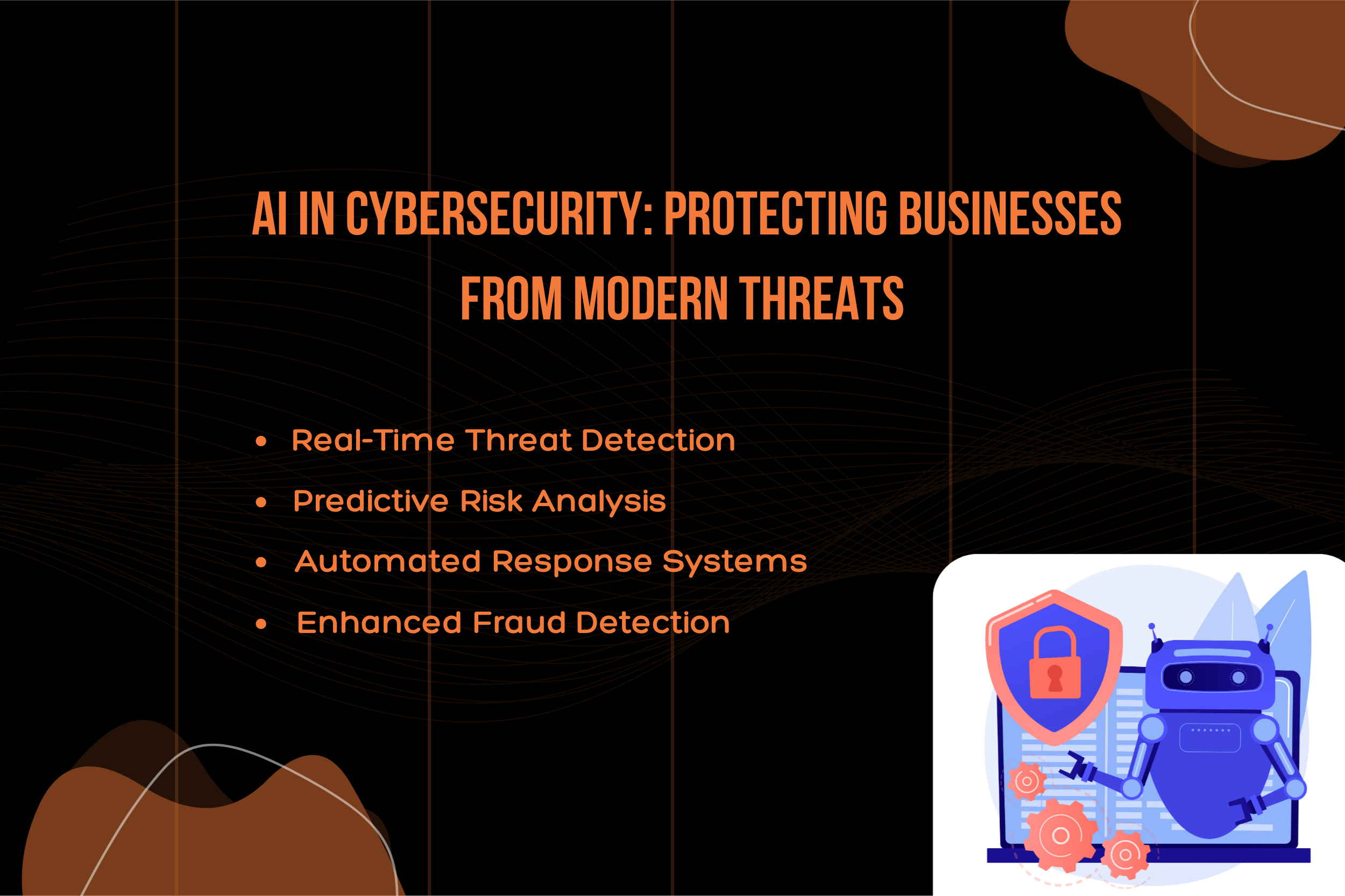
In today’s digital world, cyber threats are evolving faster than ever. Traditional security systems are no longer enough to protect sensitive data and business operations. This is where Artificial Intelligence (AI) is transforming cybersecurity. By leveraging intelligent algorithms, businesses can detect, prevent, and respond to threats in real time, ensuring stronger protection against modern cyber attacks.
“Design is the fundamental soul of a human-made creation that ends up expressing itself in successive outer layers of the product or service.”
-Steve Jobs-

What is AI in Cybersecurity?
AI in cybersecurity refers to the use of machine learning, data analytics, and automation to identify and mitigate cyber threats. Unlike traditional systems, AI can analyze massive amounts of data, recognize patterns, and predict potential risks before they occur.
Why Businesses Need AI for Cybersecurity
With increasing digital transformation, businesses are more vulnerable to cyber attacks such as phishing, ransomware, and data breaches. AI provides a proactive approach to security, helping organizations stay ahead of hackers.
Key benefits include:
- Faster threat detection
- Reduced human error
- Automated security processes
- Improved data protection
1. Real-Time Threat Detection
AI-powered systems continuously monitor network activity and identify unusual behavior instantly. This allows businesses to detect threats as they happen, rather than after damage has already been done.
Traditional systems rely on predefined rules, while AI learns and adapts over time, making detection more accurate and efficient.
2. Predictive Risk Analysis
One of the biggest advantages of AI is its ability to predict future threats. By analyzing historical data and patterns, AI can identify vulnerabilities before hackers exploit them.
This helps businesses:
- Prevent attacks before they occur
- Strengthen weak points in systems
- Improve overall security strategy
3. Automated Response Systems
AI enables automated responses to cyber threats, reducing the need for manual intervention. When a threat is detected, AI systems can take immediate action such as:
- Blocking suspicious IP addresses
- Isolating affected systems
- Alerting security teams
This minimizes damage and ensures faster recovery.
4. Enhanced Fraud Detection
AI plays a crucial role in detecting fraudulent activities, especially in industries like banking, e-commerce, and finance. It analyzes user behavior and flags unusual transactions in real time.
For example:
- Detecting fake login attempts
- Identifying suspicious payment patterns
- Preventing identity theft
Challenges of AI in Cybersecurity
While AI offers powerful advantages, it also comes with challenges:
- High implementation cost
- Need for skilled professionals
- Risk of AI being targeted by hackers
- Data privacy concerns
Businesses must address these challenges to fully leverage AI’s potential.
Future of AI in Cybersecurity
The future of cybersecurity lies in advanced AI technologies. As cyber threats become more sophisticated, AI will continue to evolve with:
- Self-learning security systems
- Advanced threat intelligence
- Integration with cloud security
- Improved automation and accuracy
Conclusion
AI is revolutionizing the way businesses approach cybersecurity. From real-time threat detection to predictive analysis and automated responses, AI provides a powerful defense against modern cyber threats. By adopting AI-driven security solutions, businesses can safeguard their data, protect their customers, and ensure long-term success in the digital era.

0 Comments