

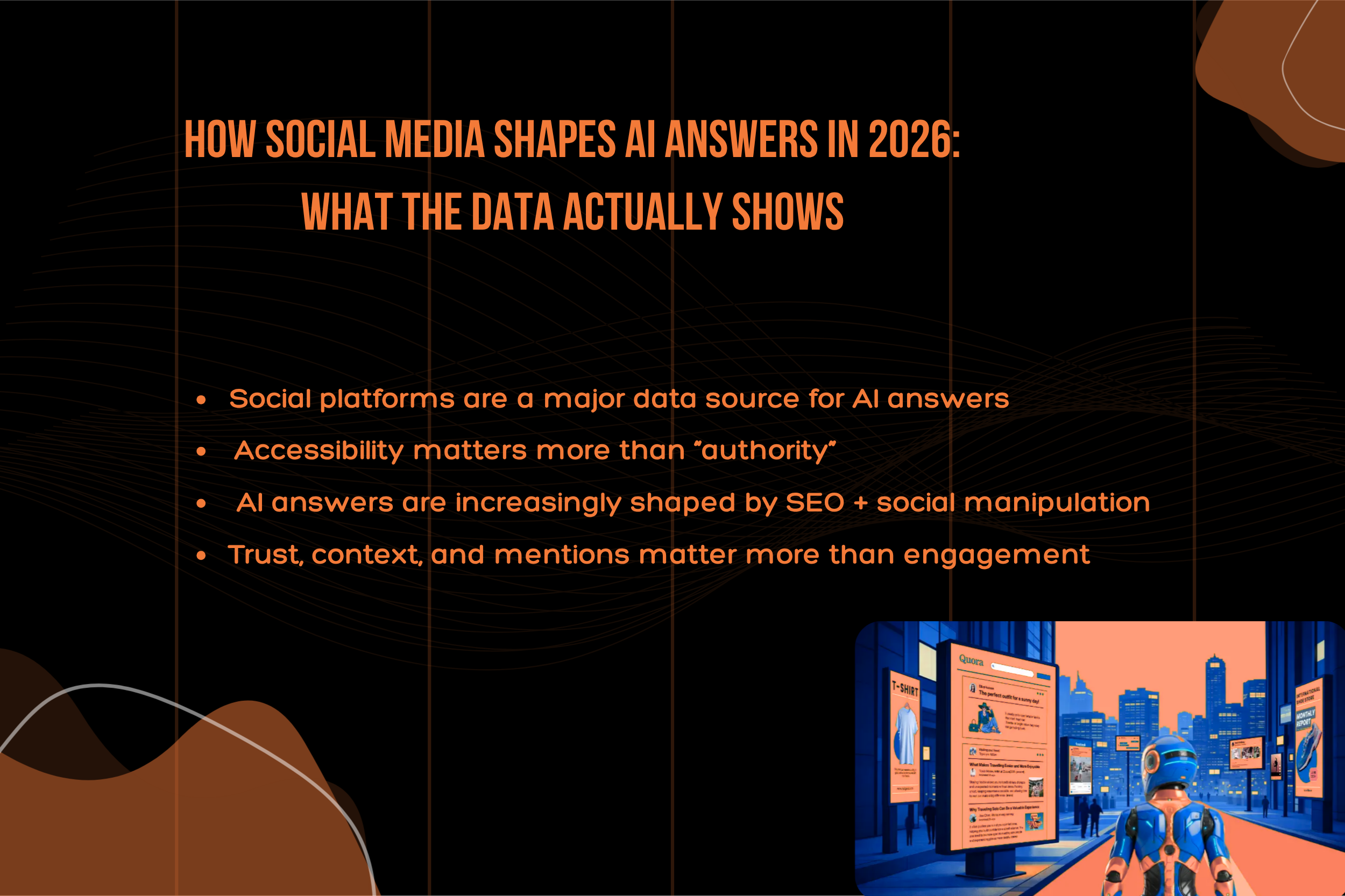
In 2026, artificial intelligence is no longer just a tool—it’s a decision-making assistant influencing how people search, learn, and act. But what many users don’t realize is that AI answers are increasingly shaped by social media data. From trending discussions to viral posts, platforms like Instagram, Reddit, and X (Twitter) are playing a major role in defining what AI systems present as “truth.”
This shift has major implications for businesses, marketers, and content creators. Let’s explore what the data actually shows and how you can adapt.
“Design is the fundamental soul of a human-made creation that ends up expressing itself in successive outer layers of the product or service.”
-Steve Jobs-

Social Media Is Now a Primary Data Source for AI
Traditionally, AI models relied heavily on structured sources like websites, research papers, and news articles. However, in recent years, social platforms have become a massive, real-time data source.
AI systems now analyze:
- Trending hashtags
- Viral posts and reels
- Community discussions
- User-generated content
This means that what people talk about online directly impacts AI-generated answers. If a topic trends heavily on social media, it is more likely to appear in AI responses—even if it’s not from a traditionally authoritative source.
Accessibility Matters More Than Authority
One of the biggest shifts in AI behavior is that accessible content often outranks authoritative content.
Earlier:
- High-quality blogs and verified sources dominated
Now:
- Easily accessible, frequently shared content gains priority
Why? Because AI models prioritize:
- Content freshness
- Engagement signals
- Distribution reach
This means a well-optimized Instagram post or Reddit thread can sometimes influence AI more than a detailed research article.
SEO + Social Signals = AI Visibility
In 2026, SEO is no longer limited to search engines. It has evolved into a combination of:
- Traditional SEO (keywords, backlinks, technical optimization)
- Social SEO (shares, mentions, engagement, trends)
AI systems now consider:
- How often your content is mentioned
- How widely it is shared
- The context in which it appears
This creates a new reality where social media manipulation and trend hijacking can influence AI outputs. Brands that understand this can strategically position their content for better visibility.
Trust, Context, and Mentions Matter More Than Engagement
While likes and comments are still important, AI systems now go deeper. They analyze:
1. Trust
- Is the source consistent?
- Does it have a history of reliable content?
2. Context
- How is the content being discussed?
- Is it informative, controversial, or misleading?
3. Mentions
- How often is your brand or topic referenced across platforms?
This means quality conversations and brand presence matter more than just viral engagement.
What This Means for Content Creators & Businesses
To succeed in this AI-driven ecosystem, you need a hybrid strategy:
1. Create Shareable Content
Focus on content that people want to:
- Share
- Discuss
- Save
2. Be Active on Social Platforms
Don’t rely only on your website. Build presence on:
- X (Twitter)
3. Optimize for Conversations
Encourage:
- Comments
- Discussions
- Community interaction
4. Build Topical Authority
Cover your niche deeply so AI recognizes your expertise.
Future of AI and Social Media Integration
The connection between AI and social media will only grow stronger. In the near future:
- AI answers will become more real-time
- Social trends will directly influence search results
- Personalization will depend on user behavior and social activity
This means businesses must stay agile and continuously adapt their content strategies.
Final Thoughts
Social media is no longer just a marketing channel—it is now a core influence on how AI generates answers. Accessibility, engagement, and contextual relevance are reshaping digital visibility.
If you want your content to appear in AI-driven results, you need to think beyond traditional SEO and embrace a social-first content strategy.

0 Comments