

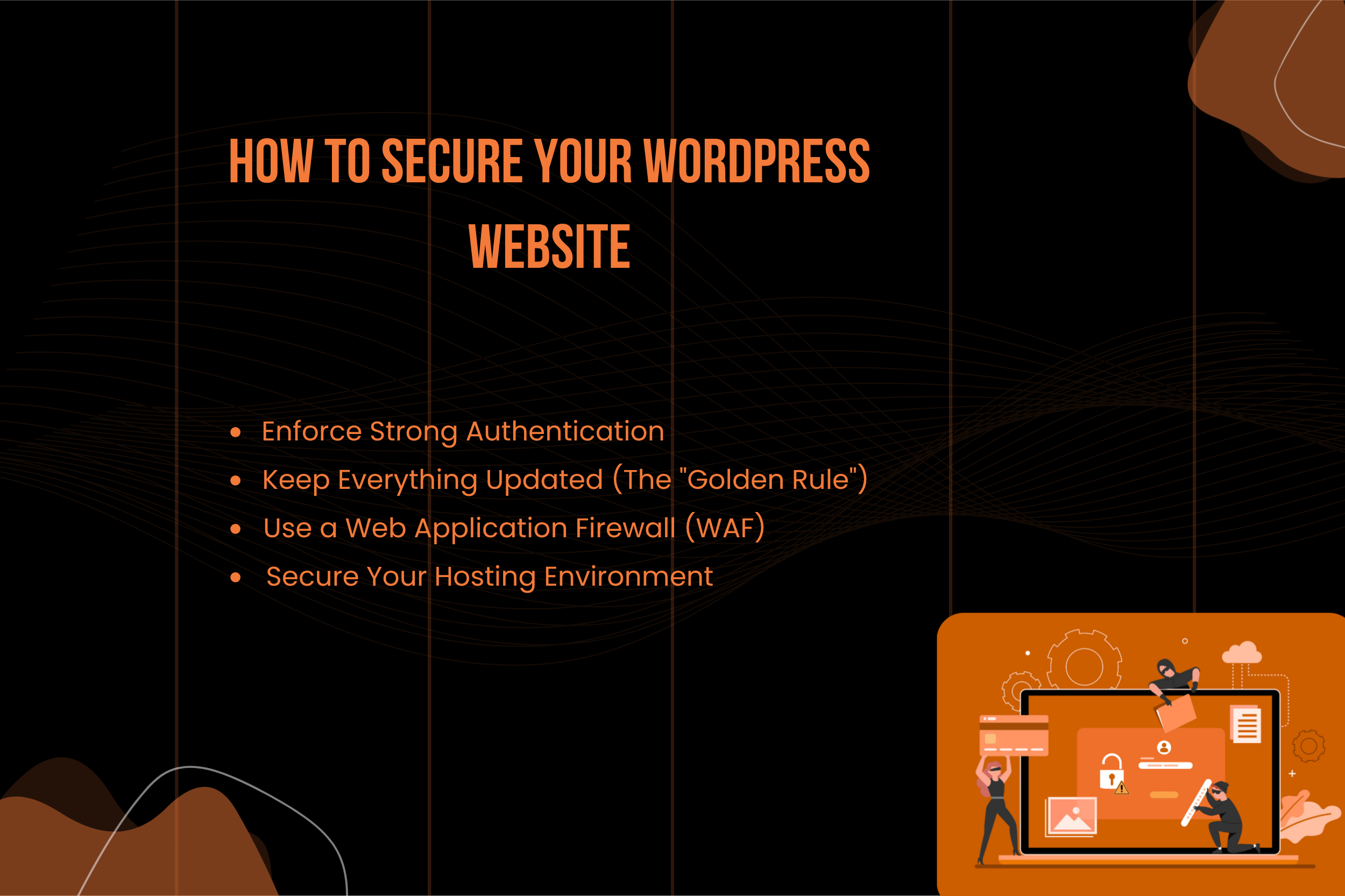
In today’s digital world, your website is one of your most valuable assets. If you’re using WordPress, you already have a powerful platform—but without proper security, your site can become vulnerable to hackers, malware, and data breaches.
Website security is not just an option—it’s a necessity. Whether you run a blog, business website, or eCommerce store, securing your WordPress site should be your top priority.
In this guide, we’ll cover the most effective ways to protect your WordPress website and keep your data safe.
“Design is the fundamental soul of a human-made creation that ends up expressing itself in successive outer layers of the product or service.”
-Steve Jobs-

1. Enforce Strong Authentication
One of the most common reasons websites get hacked is weak passwords. Many users still use simple passwords like “123456” or “admin123,” making it easy for attackers to gain access.
What You Should Do:
- Use strong and unique passwords
- Avoid using “admin” as your username
- Enable Two-Factor Authentication (2FA)
- Limit login attempts to prevent brute-force attacks
Strong authentication adds an extra layer of security, making it much harder for hackers to break into your website.
2. Keep Everything Updated (The “Golden Rule”)
Outdated software is one of the biggest security risks in WordPress. Hackers often exploit vulnerabilities in older versions of themes, plugins, and core files.
Keep Updated:
- WordPress Core
- Plugins
- Themes
Pro Tip:
Always delete unused plugins and themes. Even inactive ones can be a security risk.
Regular updates ensure your website is protected against the latest threats and vulnerabilities.
3. Use a Web Application Firewall (WAF)
A Web Application Firewall (WAF) acts as a protective barrier between your website and incoming traffic. It filters out malicious requests before they even reach your site.
Benefits of WAF:
- Blocks hackers and bots
- Prevents SQL injections and XSS attacks
- Improves overall site security
Using a firewall is like having a security guard for your website 24/7.
4. Secure Your Hosting Environment
Your hosting provider plays a huge role in your website’s security. A poor hosting environment can expose your site to serious risks.
What to Look For:
- SSL Certificate (HTTPS)
- Regular backups
- Server-level security
- Malware scanning
Recommendation:
Choose a reliable and secure hosting provider that prioritizes performance and protection.
Bonus Tips for Extra Security
To make your website even more secure, follow these additional best practices:
✔ Regular Backups
Always keep a backup of your website so you can restore it quickly if something goes wrong.
✔ Install Security Plugins
Use trusted plugins like Wordfence or Sucuri to monitor and protect your website.
✔ Disable File Editing
Disable file editing in the WordPress dashboard to prevent unauthorized changes.
✔ Use Secure Login URL
Change your default login URL (wp-admin) to something unique.
Final Thoughts
Securing your WordPress website doesn’t have to be complicated. By following these simple yet powerful steps—strong authentication, regular updates, firewall protection, and secure hosting—you can significantly reduce the risk of cyber attacks.
Remember, prevention is always better than cure. Investing time in website security today can save you from major losses in the future.
Conclusion
Your website is your digital identity—protect it wisely. Implement these security practices and stay one step ahead of potential threats. A secure website not only protects your data but also builds trust with your users.

0 Comments